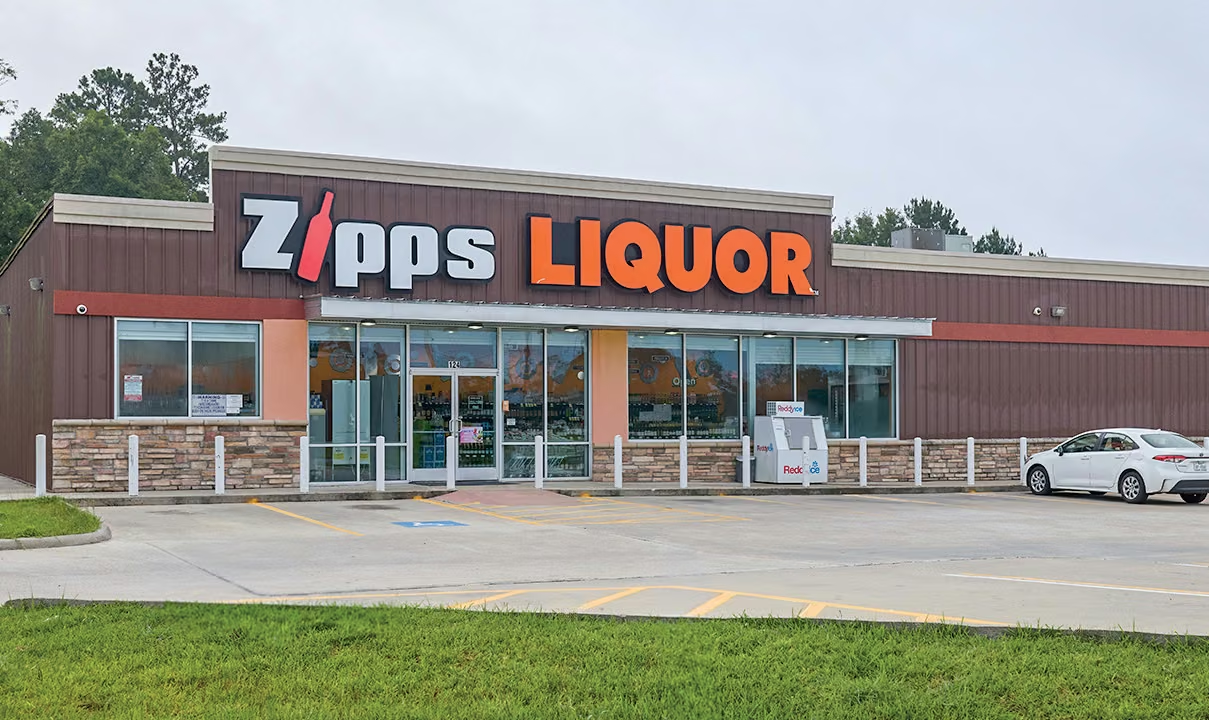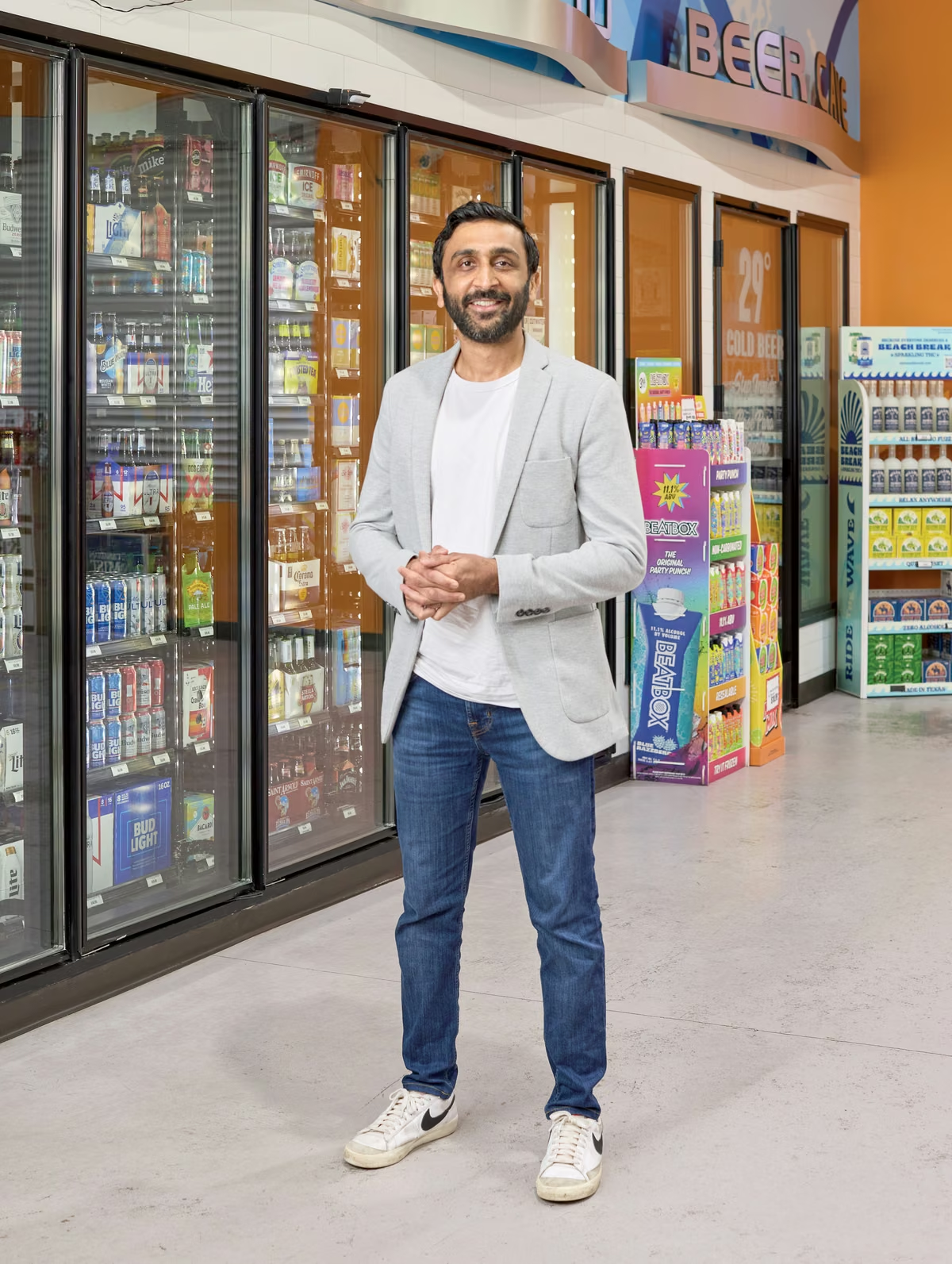
The first Zipps Liquor store, launched in 1994 in Houston, “was born out of a real estate problem,” according to Anuj Mittal, the now chief operating officer of the 38-store Texas chain. Mittal was a child at the time, but it was his family members who, upon settling in the United States from India, needed a start in business. “Zipps was a good base, a starting ground,” Mittal says. “From there, they really diversified into what were at that time the core businesses, which were Subways (restaurants), gas stations and retail strip centers.”
Today, Zipps is far more than a real estate solution for Midway Group, the investment firm owned by Mittal’s family. The group was founded by four family members—Nick Mittal, Mike Mittal, Paul Singh, and Bob Ghuman—who are today joined by the second generation of co-owners that includes Mittal as well as Varun Mittal, Hartej Singh, and Mansher Ghuman. Mittal works with his uncle, Mike, who serves as CEO of Zipps. The elder Mittal is widely regarded within the company as the founder and driving force behind the brand, as well as Anuj’s primary mentor. He remains directly involved in the business day-to-day, with a particular focus on margin discipline.
The 38-store Zipps Liquor chain is positioned as an inviting alternative to the big box stores and small, specialty beverage alcohol retailers. “We are the Trader Joe’s or Aldi’s of the liquor world,” Mittal says.
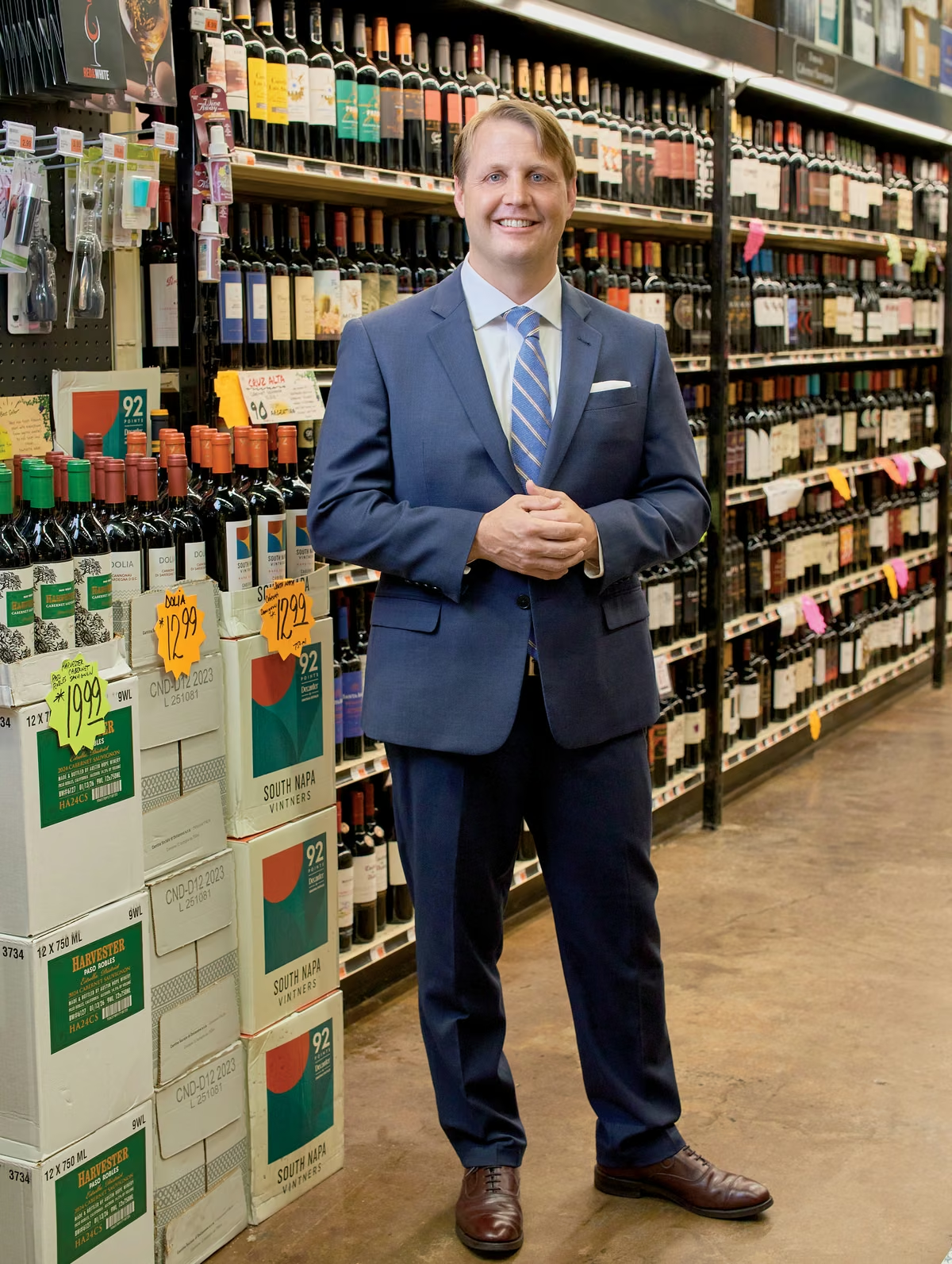
For his efforts to continue his family’s legacy and growing the Zipps brand as a standalone, Anuj Mittal has been named a 2026 Market Watch Leader.
Liquor Store Evolution
In the early 2000s, Zipps was still a sideline business for Midway Group. The partners frequently had vacant retail spaces adjacent to their gas stations and strip centers, and began placing Zipps stores into those spaces to fill them.
Mittal says Zipps was not a key focus for his family’s firm until around 2015, when the partners committed full resources to growing Zipps as a standalone business. At that time, the chain comprised eight stores. During the most aggressive growth years the company opened six to eight new stores annually; roughly 70% of the chain was built ground-up, with a smaller number of acquisitions.
Mittal had joined Midway Group in 2013, fresh out of the University of Houston, where he studied finance. “My first two to three years at Midway was really learning our core businesses, which at that time were the Subways and convenience stores/gas stations,” he recalls, noting that through Subway he learned how to “control the controllable numbers” like food costs and labor, and through the gas stations, learned the importance of transaction speed.
Mittal was vice president of operations when the rapid expansion began. “That’s really where my learning came from, especially those first few years where we were scaling at six to eight new stores a year,” he says. “A lot of my time was spent on creating the systems and processes that hold our team accountable to deliver that same operational excellence that we did at eight stores. Taking Zipps from eight stores to 38 in a relatively short amount of time has been a really good challenge.”
Today, Zipps Liquors has stores in the Houston metropolitan areas and in the more sparsely populated East Texas region. Combined, the 38 locations generated more than $50 million in revenue in 2025 and “we’re projecting close to the same, if not a bit more, this year,” Mittal says.
“We don’t try to be like the big box guys, and we’re certainly not the neighborhood stores,” he continues. “We’re kind of in that middle ground. Aldi and Trader Joe’s are extremely convenient. They’re not too expensive. And their selection, while it’s not huge, it’s the stuff that people are looking for. And that’s really what we are about.”
The company builds on three pillars—pricing, selection, and convenience. “In the urban areas we know we can’t beat the big guys on price and selection, but we often find that for convenience sake, people do come to us,” Mittal says. “In East Texas, in rural locations or small towns, we’re winning on all three. We are definitely the price leader and often the selection leader. And we’re definitely not less convenient than any of the other options that people have.”
The Experience
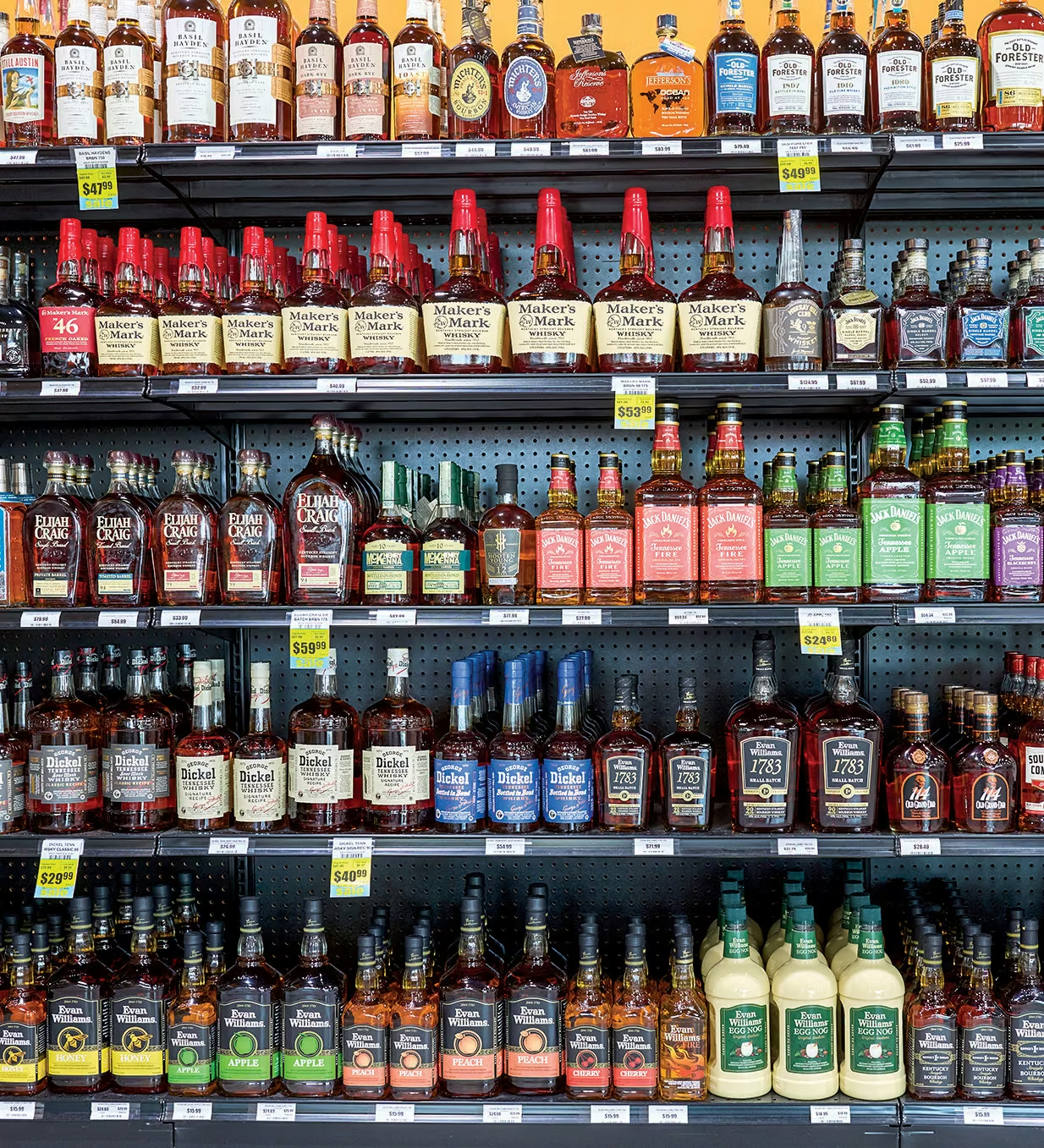
Zipps Liquor stores measure anywhere from 2,000–6,000 square feet, somewhat diminutive compared to other prominent Texas chains. They’re on the smaller side by design, Mittal says. “One of the guiding philosophies in our merchandising is that we believe any customer should be able to walk into Zipps and be able to find what they’re looking for within 30 seconds,” he says.
“Our stores are very clearly labeled—you can find the category you want to shop very easily,” he continues. “And, while this almost seems to go against normal retail knowledge, we have very low shelves in most of our stores. Our shelves are only three feet high in the middle of the store, while the wall shelves are six or seven feet high.” The reason? Higher shelves make the areas feel closed off and limit the scope customers can see at any given time.
“Plus, I think a big differentiator for Zipps is our people,” Mittal says. “Our longest tenured employees have been with us for 15 years, and more than 30% of our staff have been here for over five years.” Small, thoughtful moments—like putting a customer’s standard purchase on the counter when they enter the store, offering (but not pushing) help in-store and loading a car with a large purchase—all make a difference in the minds of customers, Mittal maintains.
“It’s a small-town, owner-operator feel in our store, but not the often-high prices you see in small, neighborhood stores,” he says.
A Varied Selection
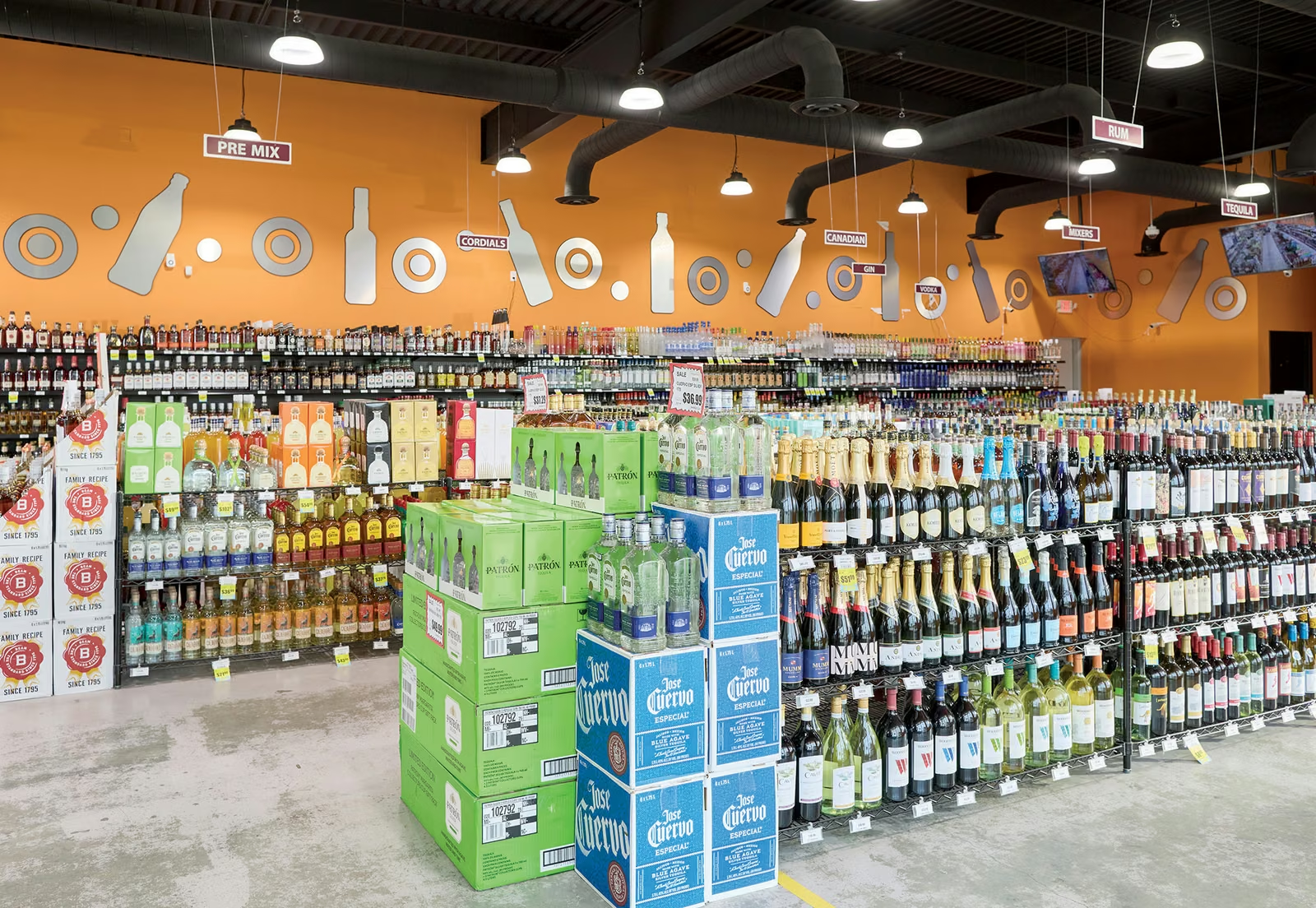
Within those stores, Mittal says the idea is to be a “jack-of-all-trades” when it comes to selection. That doesn’t mean a massive number of SKUs. Instead, Zipps Liquor has good representation in all categories but doesn’t specialize in a single sector. That said, about 80% of the selection and sales are in spirits. An average store carries just over 2,000 SKUs, with spirits accounting for 1,700–1,800 of that total.
“We’re very picky and choosy about what we bring into our stores,” he says. “Unless we fully believe that a customer is going to like a product and they’re going to like the price point, we don’t carry the product.”
Currently, Tequila is “a rocket ship of a category” that is driving much of the sales volume. “Even Bourbon drinkers have switched to Tequila,” Mittal says, noting that Don Julio “is the king right now.” In fact, Mittal says the Don Julio 70th Anniversary Crystal Añejo Tequila, which retails for $80 at Zipps, has taken off. “A lot of our customers find that that is the closest thing to a Don Julio 1942 for them at a price point that works for them,” he says.
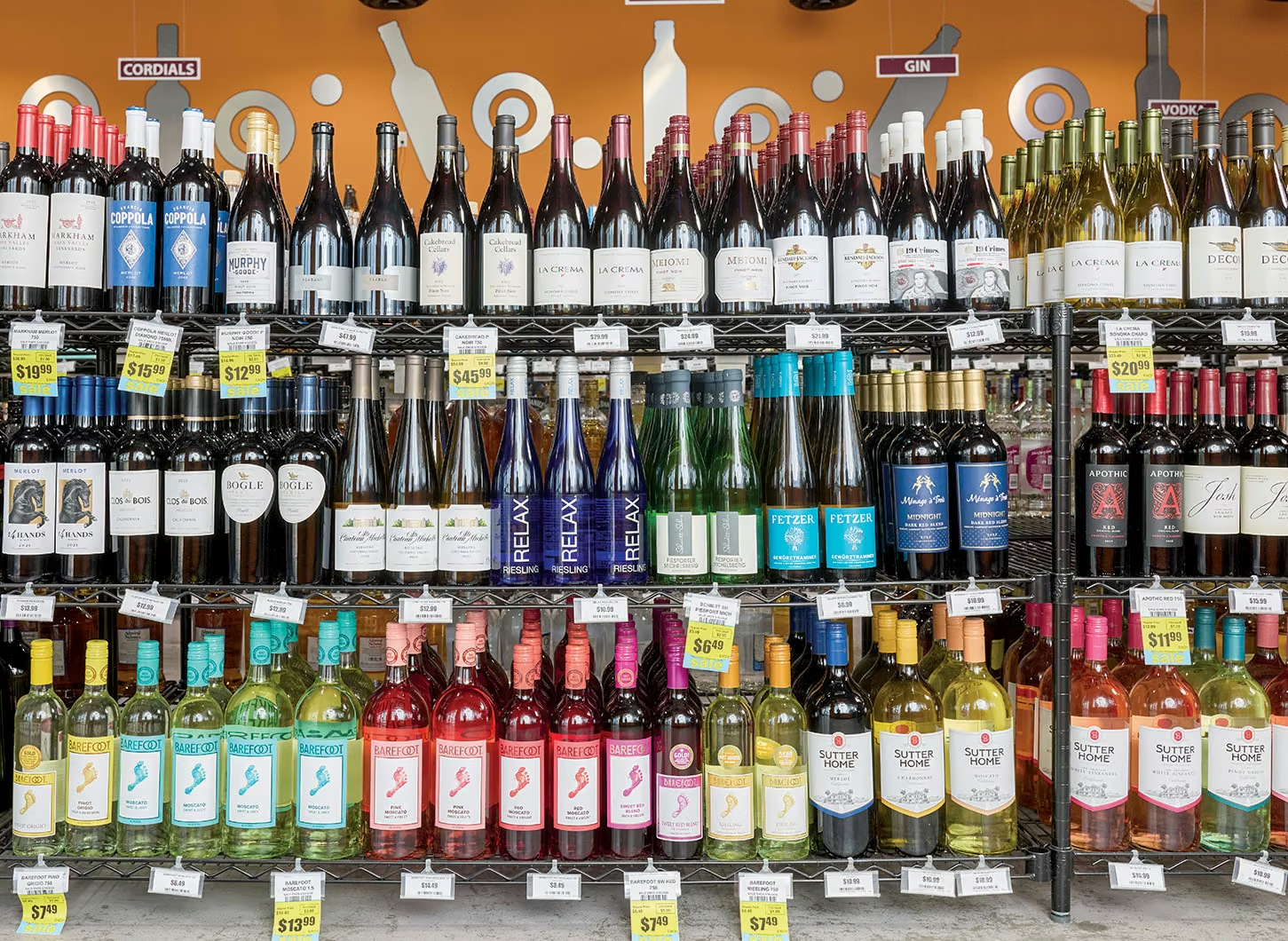
Wine accounts for 10–15% of volume at Zipps, and the typical mix is 150–200 SKUs, mainly core national brands. “We know our customers aren’t coming to Zipps to look for boutique wines,” Mittal says. “The bulk of our selection is concentrated on the $10 to $20 range with a few premium options mixed in.”
Beer is even less of a focus. “We don’t really actively manage our beer category,” Mittal admits. “We’re quite heavily reliant on our local beer suppliers to let us know the top SKUs we need to be carrying.” Beer demands vary based on location, so each store has a different mix, he adds.
RTDs are growing in popularity, eclipsing beer in most stores. High Noon, Cutwater and Surfside dominate, Mittal says, and Crown Royal’s RTD line is performing well. In addition, a newcomer on the scene, El Jimador’s New Mix, is “going absolutely bananas” in Zipps Liquor stores.
With limited space and SKUs, Mittal says it’s crucial for him and his team to keep abreast of any trending products. “We’re finding that we have to be tuned in on what’s happening on social media,” he says. “And we have to very quickly decide whether the hype is real or not. Is it going to die in two weeks? Are our suppliers seeing the same thing—are they having trouble stocking that item? We have to quickly make those decisions and jump on those trains, or decide not to jump on those trains.”
The Cutwater RTDs are a good example. “We had three feet of shelf space dedicated to Cutwater, but after the social media craziness that happened to them last year, we probably had 15–20 feet of our space dedicated to the brand, and the space was very, very deserved.” A similar phenomenon happened with Taylor Port, albeit on a smaller scale, a few years ago, he adds.
Zipps launched its e-commerce platform in 2022. Customers can order from any location for pickup or delivery at the same prices offered in-store, a deliberate pricing transparency commitment. Mittal says that while Zipps continues to invest in digital, leadership is explicit that the in-store experience remains the heart of the brand.
The company also maintains an active customer email program, engaging a list of more than 12,000 subscribers on a weekly basis with product launches, tastings, and store events.
The more interactive and entertaining, the better. “We’re not just looking for someone just to pour things,” he says. “We’re looking for how that tasting can deliver a better experience to our customers. What’s something that’s going to make that customer talk about their experience here at Zipps?”
Next Moves
The current economic instability, inflationary pressures and the reality that many people are drinking less or not at all, are all weighing on Zipps as an organization. “The outlook is bleak and we’re feeling it,” Mittal says. “However, due to our cost structure, we run a very lean, mean machine. We own most of our real estate. Our CEO is laser focused on margins. So, yes, the industry is down but Zipps is in a good place. We’re not in any sort of panic mode.”
In fact, Zipps is continuing its acquisition push. “Our plan is 10%-20% growth every year through acquisitions,”
Mittal says. “We’re opportunistic. This year, for example, we’re not for sure that there are going to be three or four acquisitions on the horizon, but we’re always open to if an opportunity comes up.”
“It’s really all about timing for acquisitions for us and really what works for our trade area,” he continues. “We really like for each store to be within one hour of the next store, just so that it’s a little bit easier for our team to manage.”
Mittal isn’t ruling out opportunities in other states but says Zipps is focused on Texas for now. And with the challenging landscape for beverage alcohol sales currently, he’s expecting expansion. “Even in a downturn there are opportunities,” he says. “And that’s really what we’re about.”