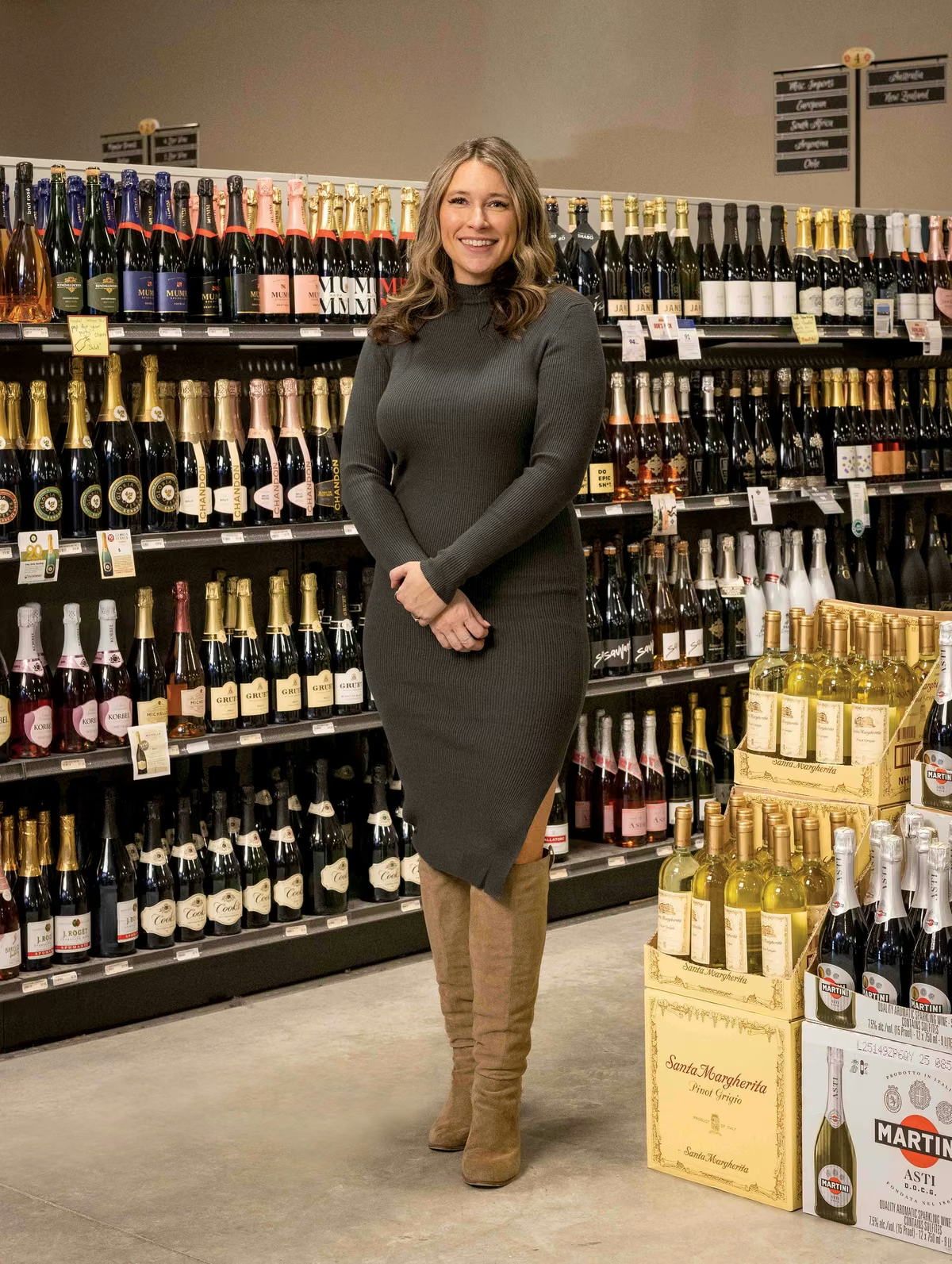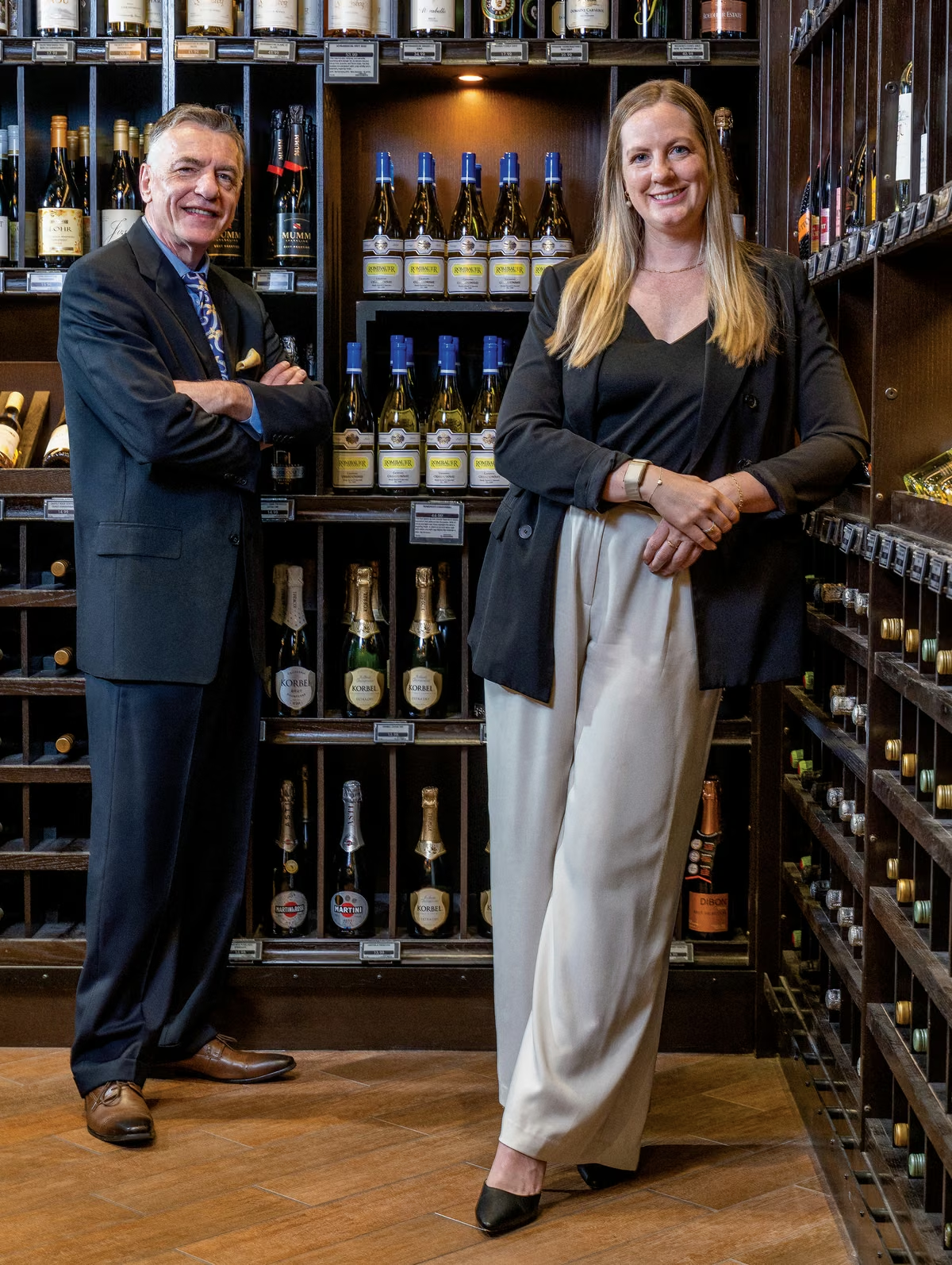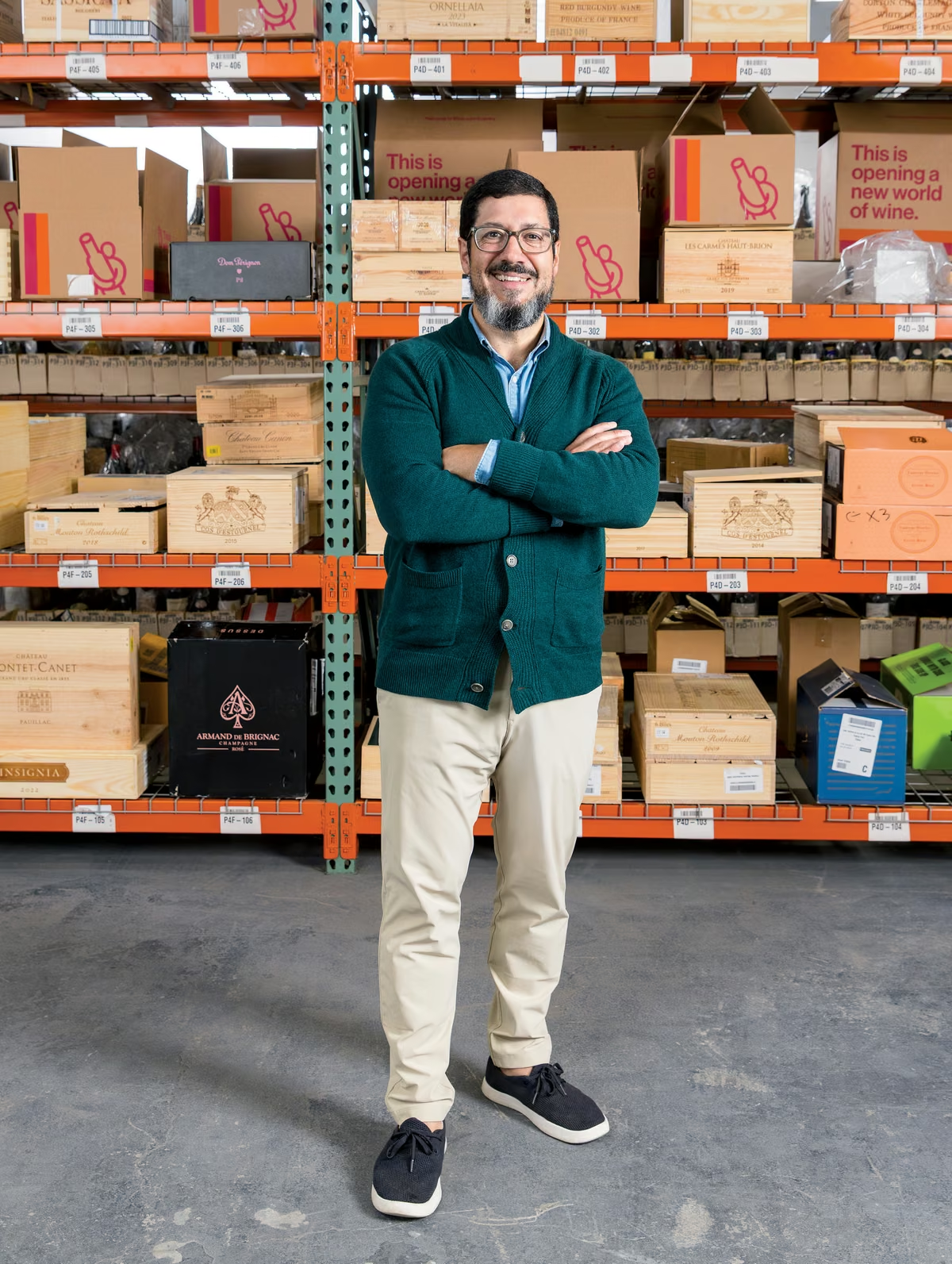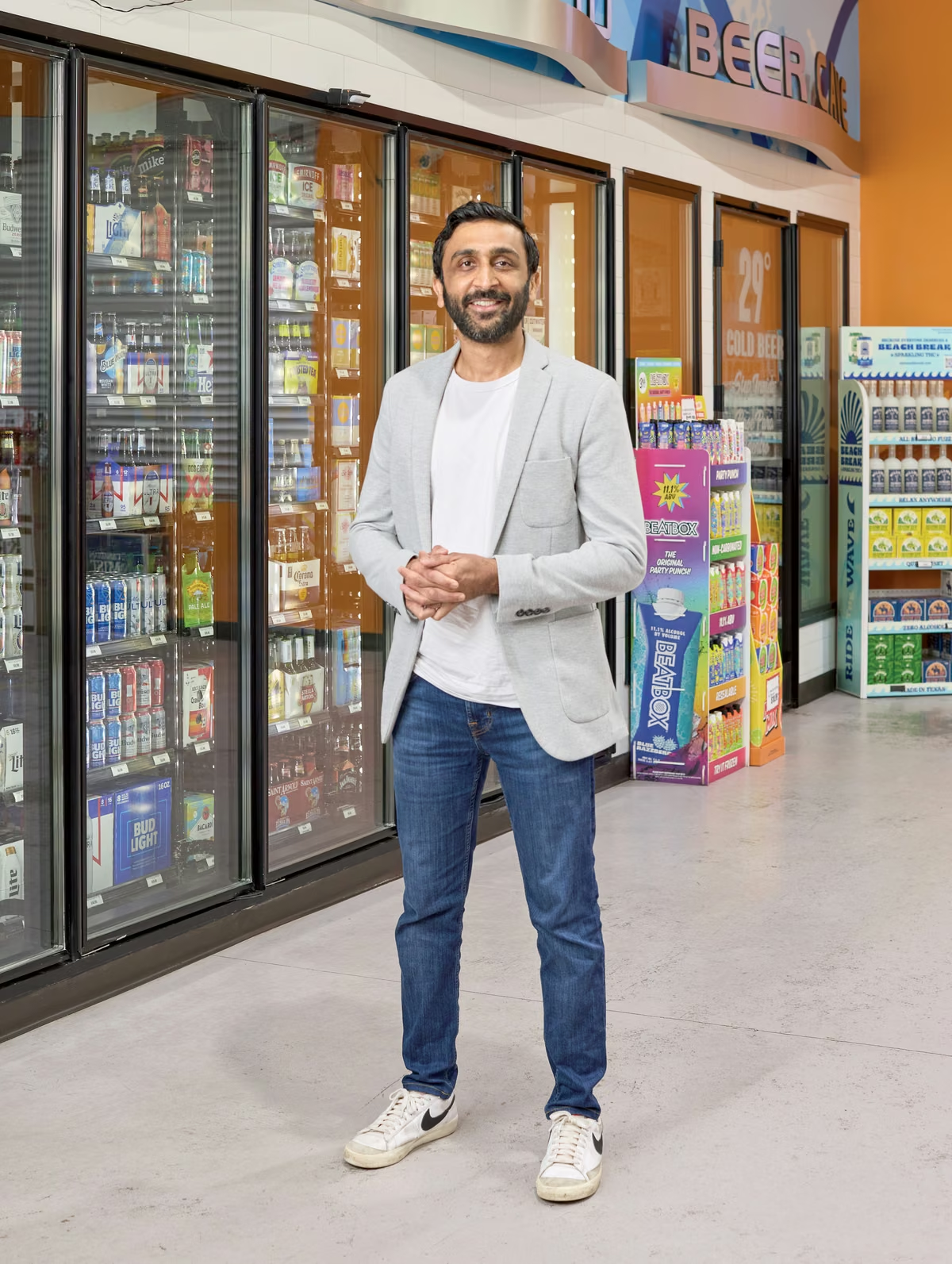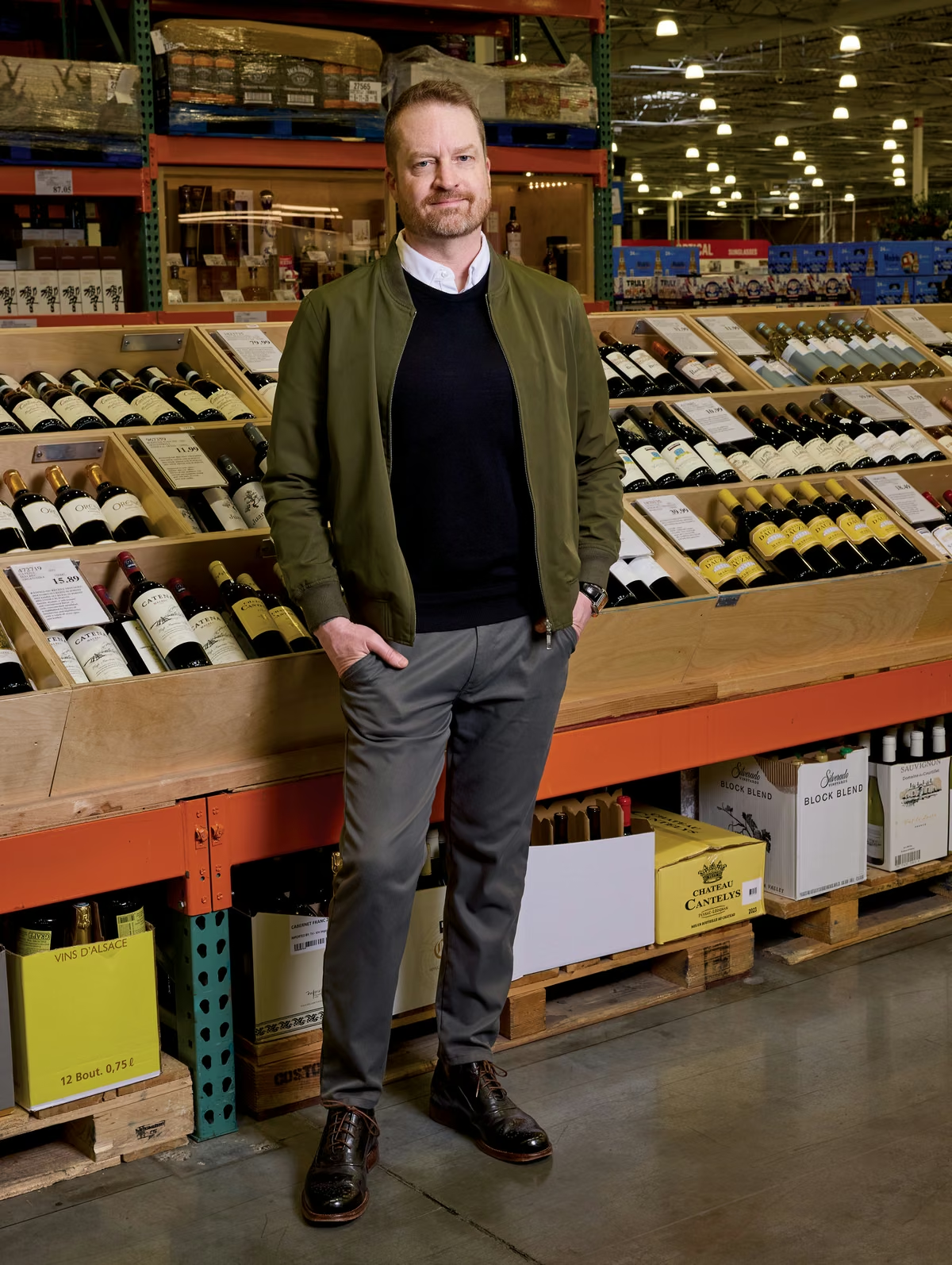
The thrill of the hunt is alive and well at Costco Wholesale Corp. The Issaquah, Washington-based chain of warehouse stores may feature huge retail spaces and a vast assortment of products overall, but the company puts a major emphasis on offering a culled down selection within each category and on rotating through products regularly to create a treasure hunt mentality. For shoppers of the store’s upscale wine, spirits, and beer section this means new labels are introduced often and it creates a sense of urgency while shopping—buy items as they come in because once they sell out they might be gone for good.
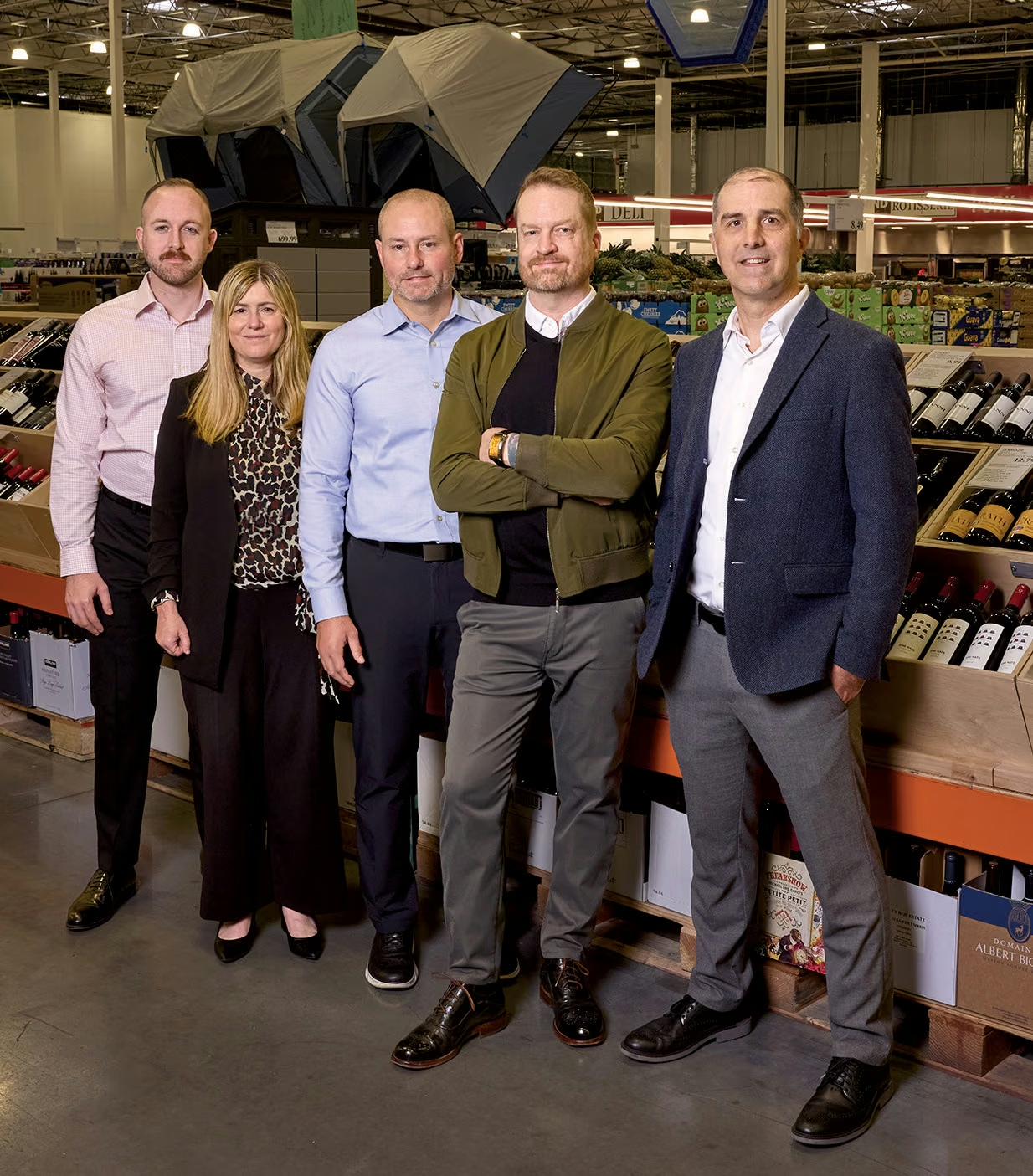
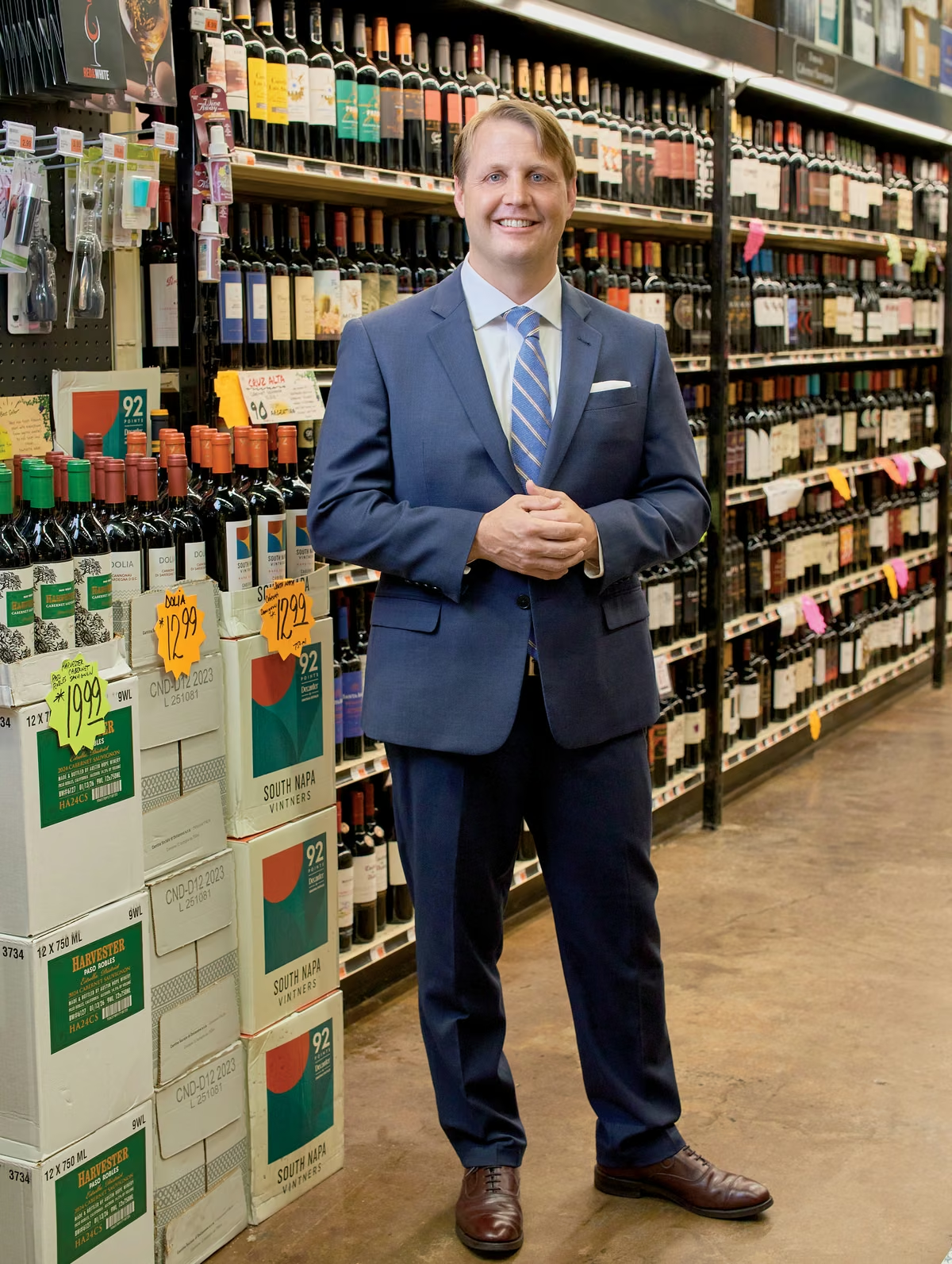
Chad Sokol, Costco’s vice president and general merchandise manager for wine, spirits, and beer, says the treasure hunt is a key factor in the continued strength of beverage sales at Costco. That coupled with a product assortment that skews higher-end while being anchored by a top-notch proprietary label program adds up to multi-billion dollar business. It also keeps Sokol and his team of beverage buyers busy.
“I like to say Costco is almost like a wine club in that our buyers select a good variety of wines from different regions and across a few price points to keep the selection manageable,” Sokol says. “Our members come to Costco because we constantly change our mix of items, which we call our ‘treasure hunt’ experience. There’s always a reason to come back and see what’s new.” For his dedication to offering a well curated assortment of wines, spirits, and beer at Costco, Sokol receives the 2026 Market Watch Leaders Retailer of the Year honor.
Beverage Basics
Sokol has been with Costco for more than 30 years and first took over its beverage division in 2020, when former Market Watch Leader and Retailer of the Year Annette Alvarez-Peters retired. Sokol transitioned to a different department in 2023 but came back as vice president and general merchandise manager for wine and liquor in 2025. Over the course of his tenure with Costco, Sokol has held numerous beverage-related roles, including assistant buyer for wine and spirits in the company’s Northern California region. Today, along with managing wine, spirits, and beer, Sokol also oversees Costco’s candy department, which includes not only traditional candy but also nuts, cocoa, protein bars, and meat snacks. Previously, he’s been a buyer and leader of other food items including frozen and refrigerated goods.
“It’s been an amazing learning experience to be in so many areas of the company and to learn vital buying skills that translate very well into the wine and spirits industry,” Sokol says. “I was recently in Asia on a cashew sourcing trip a week before I was in Bordeaux for the En Primeur campaign.”
Beverage sales remain strong and steady for Costco. In 2020, the most recent drinks data available for the company, Costco’s beverage alcohol sales in the U.S. topped $5 billion, and they’re higher today, though the company declines to release an exact figure. In 2025, Costco’s total net sales company-wide were $269.9 billion, up from $163.2 billion in 2020.
Wine is the category leader both by sales and SKUs, and Costco is committed to having an assortment that skews higher-end. “Costco has always focused primarily on fine wines, and wine SKUs typically make up at least 50% or more of our beverage floor sets,” Sokol says. “We’re continuing to expand our fine wine sets while also focusing on premium spirits. Costco’s focus on wine and spirits has remained relatively the same in terms of the overall business and footprint within our warehouses, although trends have certainly changed with the growth of RTDs and new products.”
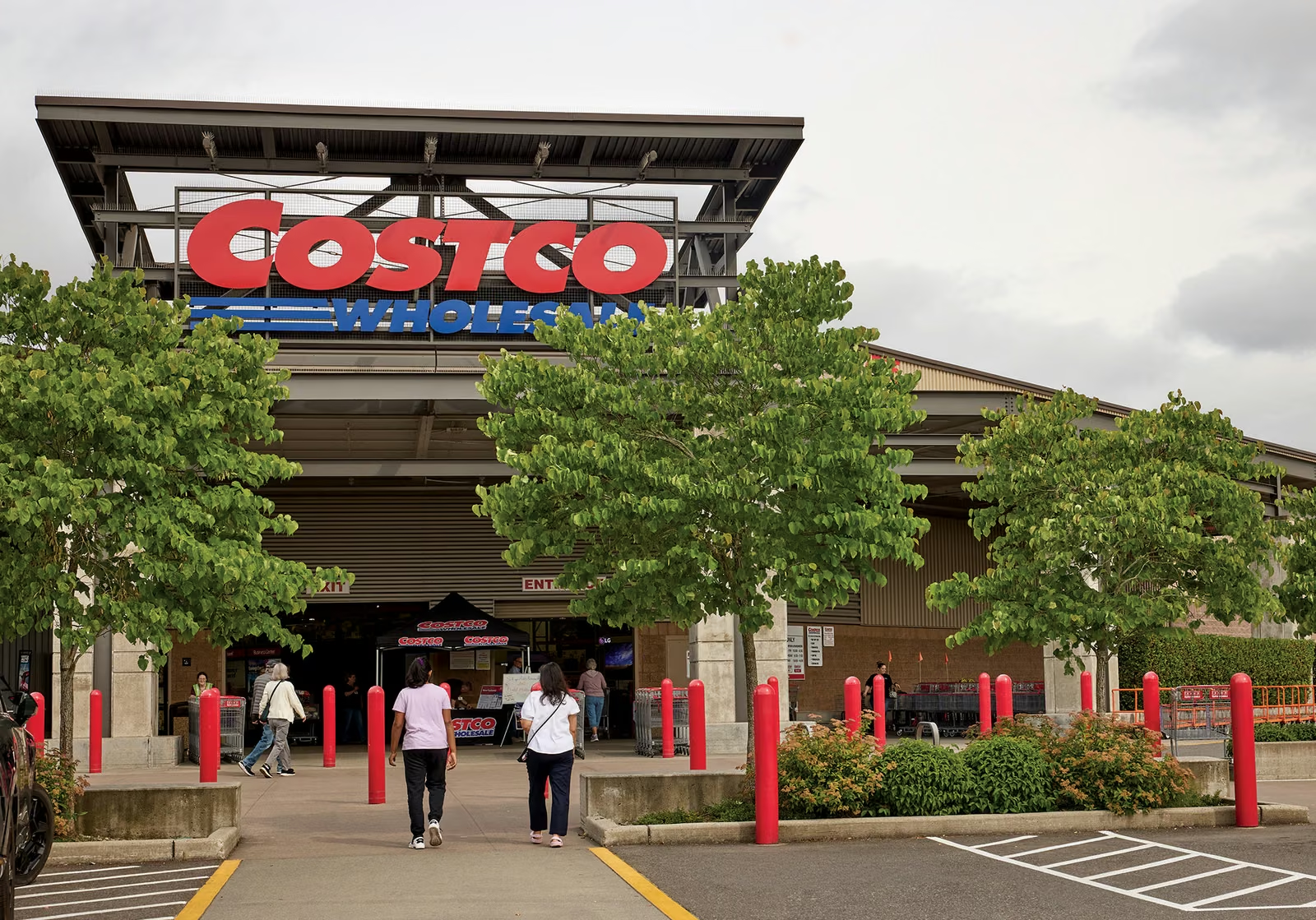
Costco operates more than 900 warehouse stores worldwide, spanning 14 countries including the United States. The U.S. is by far its biggest market with almost 650 stores and heavy concentrations in California, Washington State, and Florida. Globally, 535 Costco warehouses sell wine, 385 sell spirits, and 571 sell beer. The stores average 146,000 square feet in size and roughly 4,000 SKUs total. For beverage alcohol, the company overall has thousands of wine, spirits, and beer SKUs, though the typical store only stocks about 200 SKUs. Product assortments vary by region and even store, as Sokol says very few brands are stocked chainwide, with the exception being the company’s proprietary Kirkland Signature label, which offers a range of beverage products across wine, spirits, and beer and is purchased at a corporate level. The lack of pre-set brands across the chain is a major point of differentiation for a company with the size and scope of Costco.
“The vast majority of the department is bought by our local and regional buyers,” Sokol explains, adding that he thinks it’s a great asset. “Our regional buying offices cater the selection of wine, spirits, and beer to each local market. Some warehouses, like Scottsdale, Arizona and Napa, California, have very large wine sets, whereas Washington, D.C. has an expansive spirits set based on their sales.”
Winning With Wine
Wine has long been the focus for Costco’s beverage department, making up 50% of total beverage sales, and the company aims to have offerings across the pricing spectrum. Costco’s Kirkland Signature wines are often among the stores’ most affordable. The brand has myriad varietals, from Sauvignon Blanc and Pinot Grigio to Chianti and Bordeaux (Kirkland Signature wines range from $6–$28 a 750-ml. at the Issaquah, Washington store). “We try to have a wide variety of Kirkland Signature wines that reflect multiple regions and appellations,” Sokol says, adding that Costco’s proprietary brand is a gateway to wine for consumers who are less familiar with the category. “We carry close to 40 Kirkland Signature items in the locations that have spirits, wine, and beer. Our Kirkland Signature items are doing very well and typically out-pace the rest of the department in overall growth.” Costco stocks a full roster of brand-name wines too, including labels from domestic producers like Silver Oak, Kendall-Jackson, and Grgich Hills, and international players like Italy’s Santa Margherita and Saracco, New Zealand’s Greywacke, Germany’s Dr. Loosen, and France’s Dom Pérignon ($6–$253 a 750-ml.). These join prestige offerings like first growth Bordeaux, as well as luxury bulk wine collections in California only, such as a nine-bottle set of Duclot Collection’s 2019 Bordeaux ($14,000 for nine 750-ml. bottles) and a 24-bottle historical set of Château Haut-Brion magnums spanning vintages from 1992 through 2015 ($50,000 for 24 1.5-liter bottles).
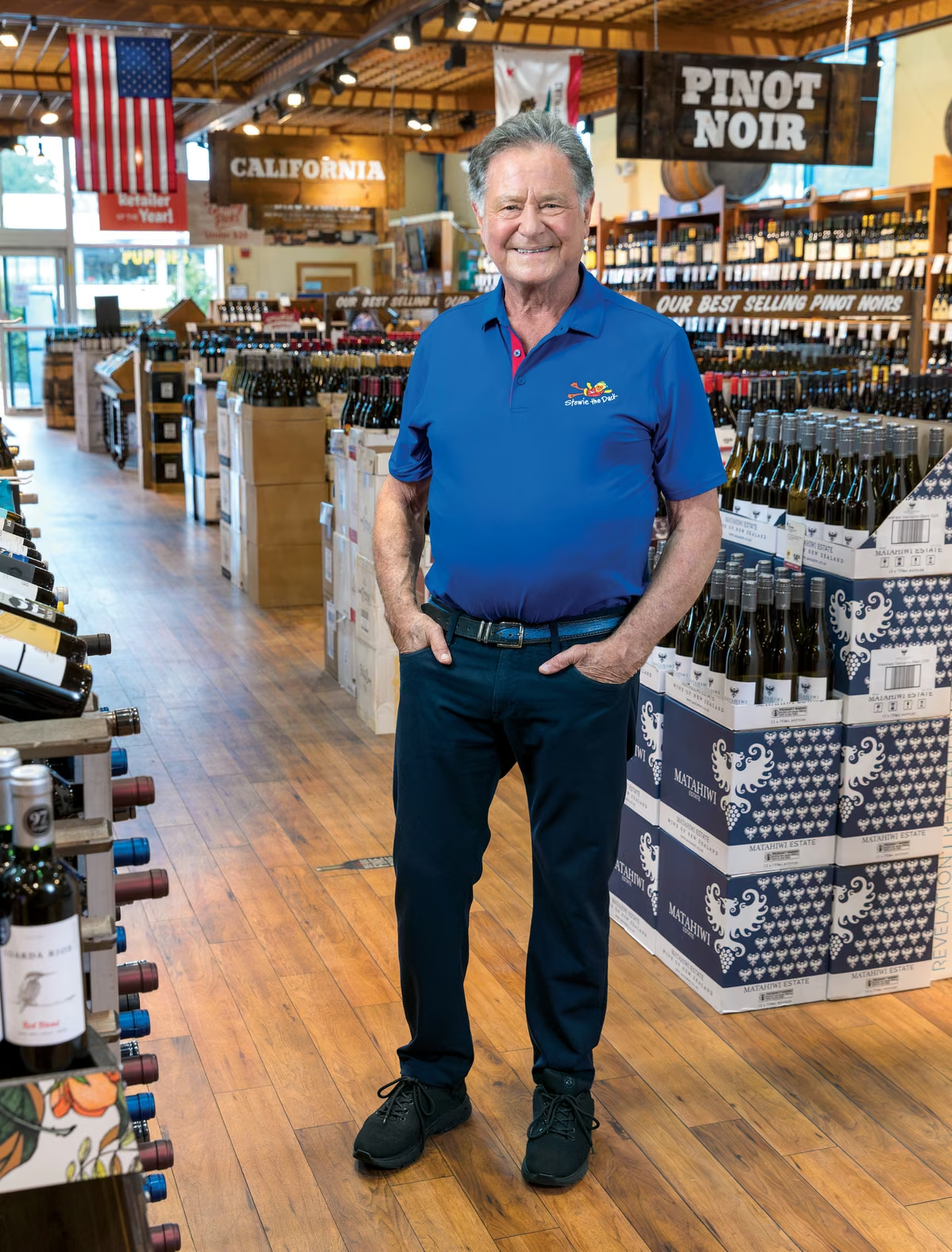
“Cabernet Sauvignon and Chardonnay dominate our overall sales, but right now Sauvignon Blanc and imported whites, especially Sancerre, are incredibly hot and showing consistent growth,” says Brian Zuhlke, Costco’s Los Angeles regional wine buyer. “Our members are gravitating toward lower alcohol, crisper, and fresher profiles. I’ve increased the space allotted for these wines in my region and I’m adding more offerings to capture demand.”
Bena Ahlberg, Costco’s Midwest regional wine buyer, says that in her area of the country Costco shoppers are willing to experiment. “Many of our members are gravitating toward new wines from familiar labels or even new wine brands they haven’t seen before and can’t find at other retailers,” Ahlberg says. “The treasure hunt atmosphere we create in fine wine offers the flexibility to test new wines frequently and keep members engaged. We’ve had great success with wines that are approachable in both flavor profile and price point.”
A few Costco warehouses with the highest wine volumes have wine stewards in-store to assist shoppers, and some locations also host winemakers and brand ambassadors who set up informational stations—Costco calls them roadshows—on site to bolster brand awareness. However Sokol says that for the most part, the company relies on its knowledgeable consumer base and on in-store signage to relay information. Costco doesn’t offer in-store sampling events in the U.S., though some international units do.
“Costco’s business model in all departments is to have great brands that our members hopefully already know,” Sokol explains. “We rely on wineries and brands to build their awareness so that when people come in they already recognize the label. We also look to bring in gems and unique wines that our members may not know, and then we use signs to display ratings, price, and a brief description. Our regional and corporate wine buyers utilize Wine & Spirits Education Trust programs for training and we collaborate with brand partners for ongoing education.”
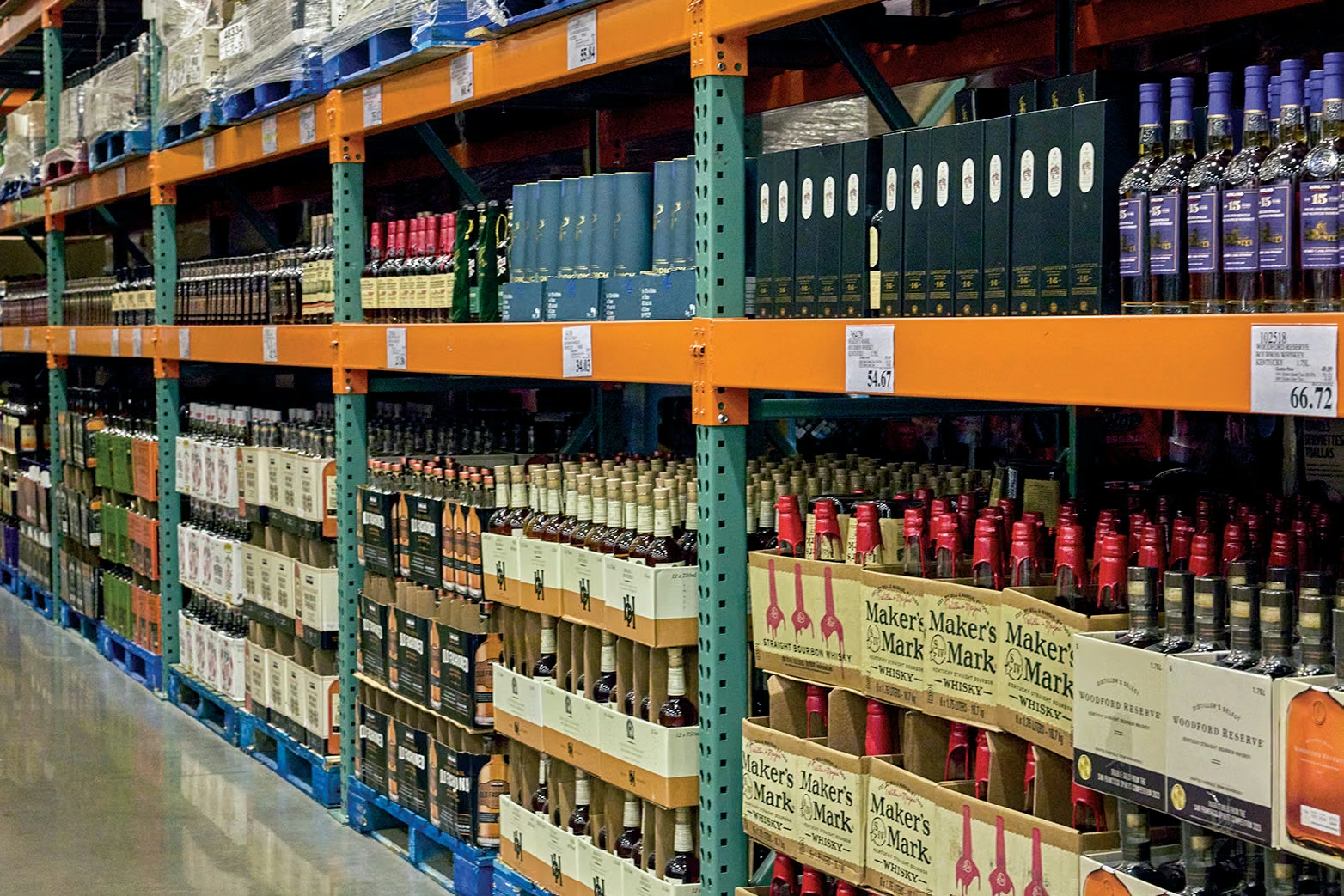
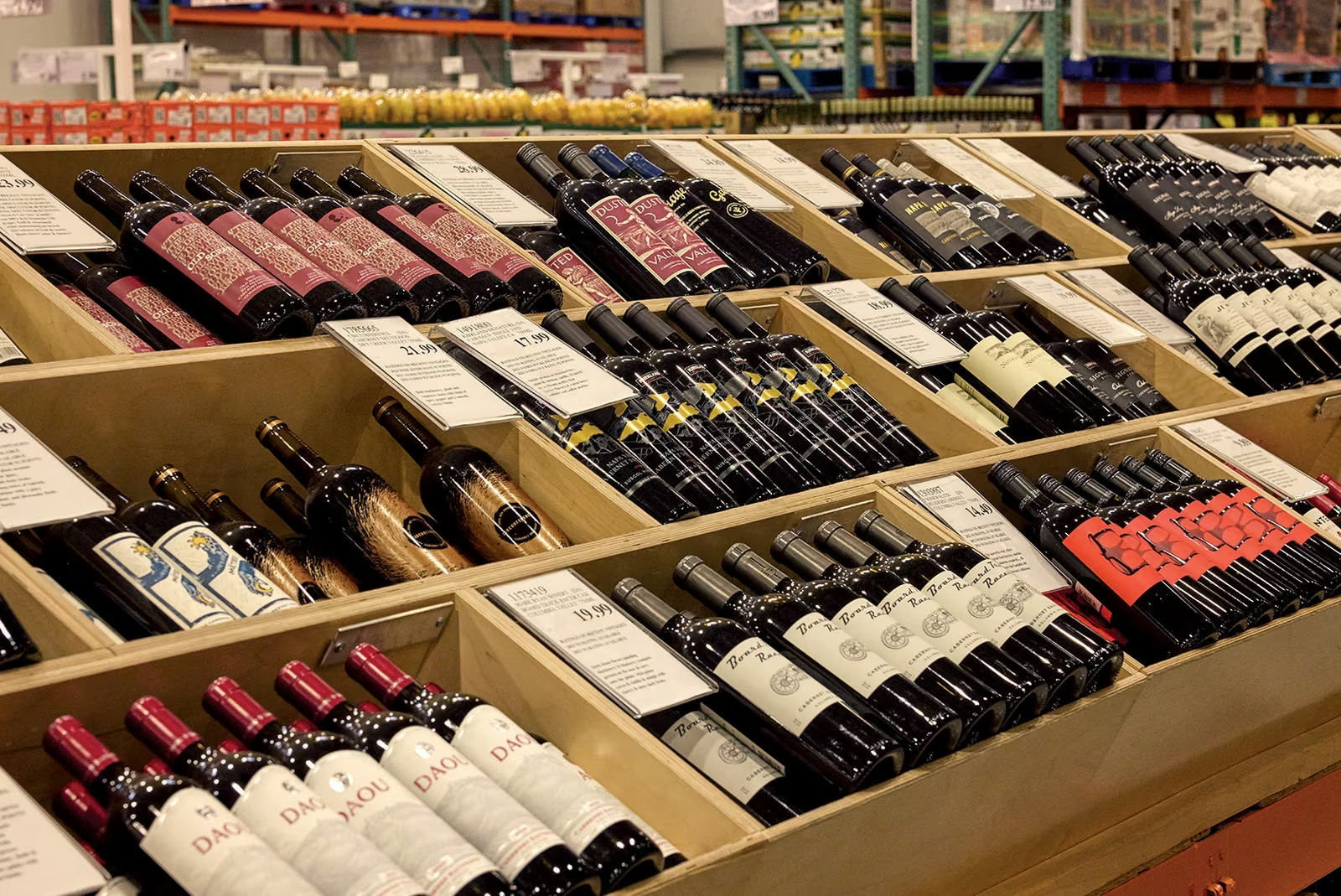
Wine is also displayed differently than most other products at Costco. Instead of large pallets and products stacked high, most wine departments feature wooden wine boxes and eye-level displays so shoppers can browse easily. “We’re focusing on expanding the fine wine boxes within most Costco locations and cutting back on full pallet offerings,” Sokol says. “This helps us control inventory and keep the rotations fresh. We’ve recognized that full pallets of too many wines can limit the rotations of new items. We can maximize SKU productivity with a better balance between wooden boxes and pallets, and this helps us focus back on what our core members are looking for. It gets us back to our roots, as Costco set out from the early days with the goal of being known as a fine wine retailer.”
Broad Spectrum
Costco built its reputation as a beverage alcohol retailer on its strong wine assortment, but spirits and beer, including RTDs, are also featured in the stores. Spirits make up about 35% of overall drinks sales, led by Tequila, Bourbon, and Scotch. The stores typically carry about 60 spirits SKUs, including big-name brands like Jack Daniel’s, Jim Beam, Tito’s, Don Julio, Cazadores, Johnnie Walker, and Glenfiddich, and these are positioned alongside a full roster of Kirkland Signature labels. The proprietary brand offers several Tequila expressions, as well as vodka, rum, and a wide variety of whiskies from a Bottled in Bond Bourbon to a High-land Scotch. Kirkland Signature spirits are $16–$80 and range in size from 750-ml. to 1.75-liter bottles, depending on the offering; brand name spirits are $16–$183, not including specialty luxury bottlings that can be priced much higher.
“I consistently hear from our members that they’re surprised to see how many highly allocated wines and spirits are available at their local Costco,” Sokol says. The beverage executive adds that along with the frequently rotating selections in stores, the quality and value found among Costco’s beverage department and among its Kirkland Signature wines and spirits make the company stand out in the retail space. “There’s something to offering a limited number of constantly rotating wines and spirits that keeps the department fresh, exciting, and not too overwhelming,” he says. “We really try to focus on treasure hunt items that over-deliver in terms of value.”
Beer is a smaller player at Costco, averaging about 20 SKUs per store, including seltzers and RTDs. The company offers a handful of Kirkland Signature beer items, like its recent Helles lager and hard seltzer variety packs ($14–$25 a 12- to 24-pack of 12-ounce cans, depending on the package). These join larger players like Bud Light, Coors Light, Heineken, and Corona Extra, and craft offerings like Elysian Brewing Space Dust IPA and Georgetown Brewing Johnny Utah pale ale. White Claw hard seltzer is also available, as is Athletic Brewing non-alcohol IPA (brand name beers start at $10 for a 4-pack of 16-ounce cans and go up to $38 for larger packages).
Costco utilizes its own membership mailing, the Costco Connection magazine, to highlight new products and offer educational information about wines and spirits, and the company’s social media team often posts content high-lighting new products. The company doesn’t offer traditional online sales currently, but it has a partnership with Instacart that allows for same-day delivery on several items, including beverage alcohol in some markets. Sokol says the company is exploring options for online orders to be picked up in store, too.
Costco has two membership levels—Gold Star ($65 a year) and Executive ($130)—and boasts an affluent membership base overall, which further supports its high-end wine and spirits selection. Sokol says that going forward, the company will remain committed to the drinks business and to sourcing top-quality, interesting products across wine, spirits, and beer. Within the next year, for Kirkland Signature specifically, Sokol plans to add more Bourbon labels and new wines from different appellations.
“We’re seeing nice growth across many states and regions as we refocus on fine wines, high-end spirits, and RTDs,” Sokol says. “We have strong growth plans to continue to deliver value and unique items for members. Our focus right now is on offering a continual rotation of new items and categories to keep the treasure hunt experience as exciting as possible. We recognize that the wine and spirits department at Costco is a great driver of foot traffic and we’re looking to expand our selection of fine wines and spirits to keep the department exciting.”