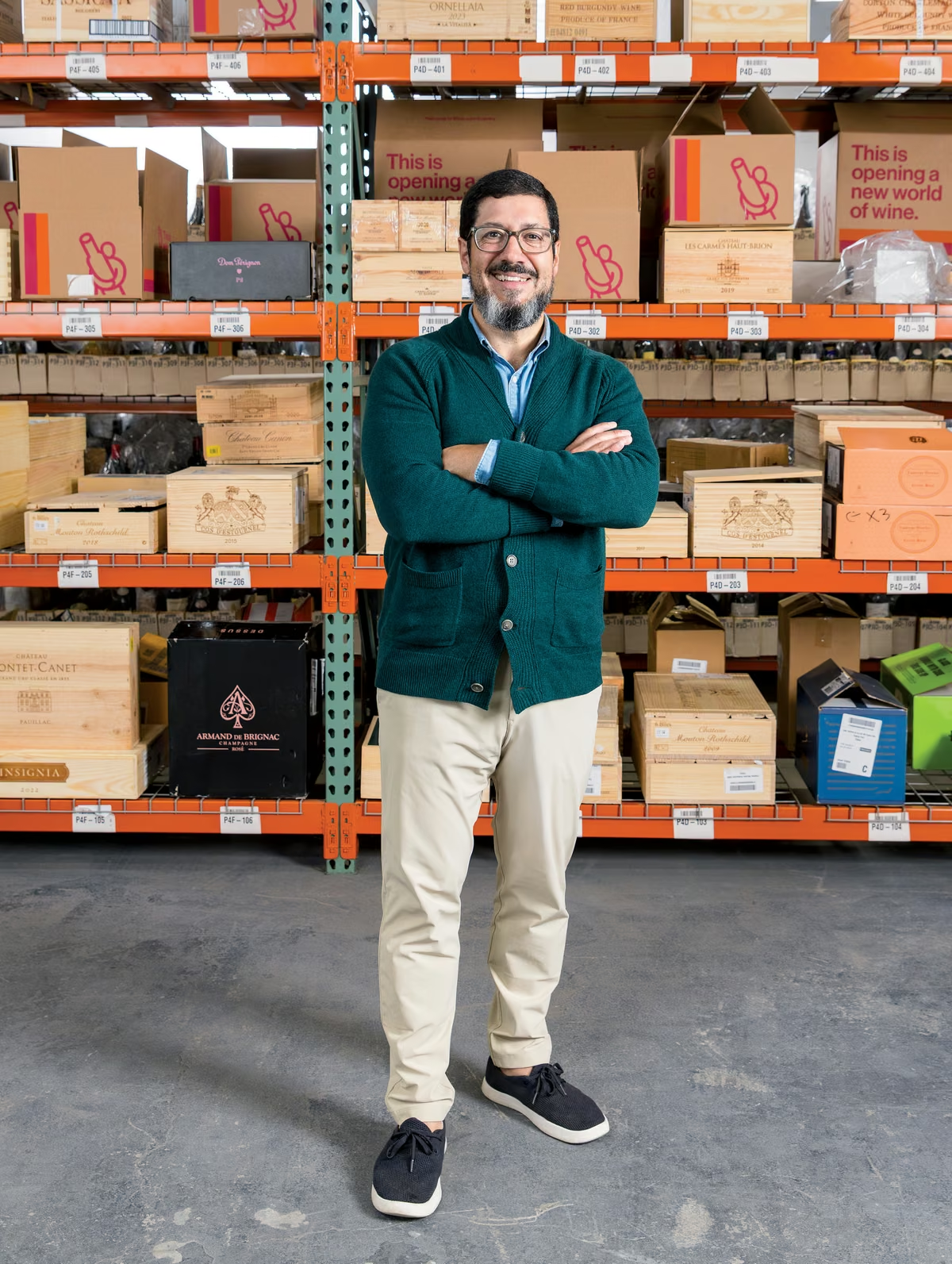
Mark Pinho says he is “a passionate wine drinker and collector, but there was no burning desire to jump into wine retail.” Nevertheless, Pinho jumped, becoming CEO of online retailer Wine.com in 2024. “There was a change of control at Wine.com, and the new ownership wanted to make a clean break and try some new things,” Pinho says.
Now, Pinho is leading the charge to shake things up in the nearly three-decades-old company. Wine.com launched in 1998 as eVineyard, a small firm based in Portland, Oregon. In 2001 the name changed to Wine.com. It scaled rapidly over the next two decades, becoming the largest online-only wine retailer in the U.S. In 2018 the company received $32.5 million in funding from Goldman Sachs, and in 2019 Wine.com began selling spirits.
The company thrived during Covid-19 and in 2022, founder Michael Osborn and then-CEO Rich Bergsund were named Market Watch Leaders. Pinho took over in October 2024, and is shifting from a “growth at all costs,” strategy.
Today, Wine.com generates revenue in the mid-$100 million range, a lower number than in recent previous years due to the shedding of most lower-priced wines from its offerings. “Our focus has been on long-term sustainability, so revenue right now is a moving number,” Pinho says.
For his new vision leading the well-known online retailer, Mark Pinho has been named a 2026 Market Watch Leader.
Customer Focus
“One of the things Wine.com was never great at was building customer relationships,” Pinho says. “There’s a convenience factor of just being on the internet, but as we all know, there’s a lot that goes into developing relationships with wine buyers over time.” The purchaser is now the focus, he says.
“We’ve got this great logo of a person holding a wine bottle, and for the first 25 years of the company, we were very laser-focused on the wine bottle and how we show everyone the most bottles of wine we can,” he says. “And now we’re focused on the person holding the wine bottle.”
Pinho says that shift is crucial at a time when the wine industry is struggling to connect to U.S. consumers. “The industry had a great run up over the last 25 years,” he says. “For the most part, wine was selling itself, and now what we’re all doing is taking a step back and saying, what do the customers want? How do we build longer term customers? How do we get people excited to drink wine and to consume it and to try different things?
“A lot of what we’re doing is built around using technology and using what I’ll call basic customer needs to start bridging that gap,” he continues. “I think the big benefit I have of coming into this business was that I spent 20 years as a consumer of wine and a buyer of wine, and so I had insights into what people are looking for in their buying experience and their relationship and their journey. A lot of folks that are in the wine industry started in the wine industry and they’ve only known the wine industry. I find it unusual that I’m one of the few people that actually spent a bunch of money on wine before joining.”
Big Fixes
Pinho has a multi-pronged strategy that he believes will right-size the offering and enhance margins and customer satisfaction. The first focus is to “fix pricing” so that it makes sense in today’s marketplace.
For much of its existence, Wine.com focused on selling a broad range of wines, utilizing lower-priced wines to drive volume and higher-priced wines to drive profitability. That strategy was “deteriorating the value of the higher-end proposition,” he says.
“We’re shifting pricing to be more cohesive around [meeting the needs of] folks that are spending more time and money around wine,” he continues. “We’re looking at what price is enticing them and how [we achieve] the right price mix. We’re using technology to do that.”
To that end, Wine.com has shed most of its inventory of wines priced below $15 a 750-ml., giving up volume to focus on wines that deliver higher margins.
“The second thing we’re doing is focusing on customer convenience,” Pinho says. Again using a technology solution, Wine.com is addressing customer needs for storage and timed delivery so they can take advantage of deals but not have to deal with multiple deliveries or interactions. The service mimics that which consumers expect in a local wine shop. Those stores “can deliver whenever the customer wants and it’s a much easier consumer experience,” he notes.
“Our belief is that the easier we make this for the customer, the more likely they are to spend more time with us,” Pinho adds. Another initiative launching in summer 2026 is a wine-finding service. Instead of simply selling the wines the company has in stock, Wine.com will source a wine requested by a consumer. “What we’re really trying to do is partner with the producers, partner with the wholesalers to make all that inventory available to folks as they’re looking, versus what happens to be on our live or virtual shelves on any given day of the week,” he says.
The goal, according to Pinho, is to utilize technology to streamline and optimize the purchasing process for consumers. “If customers are buying $20 wines or buying $120 wines, they get that same white glove service in terms of convenience, access, and storage,” he says, noting that storage will be free if the individual takes delivery any time from purchase up to the next “shipping window,” which will occur twice a year.
Online Presence, Live Events
Wine.com is also pushing more interactions with customers. The company utilizes both email and social media to bring new and existing customers to its site. It’s also expanding the website to include more marketing and educational messaging from suppliers, and is even co-hosting live events in select markets. “If Wilson Daniels, for example, is doing a tasting in Florida, we can figure out who their customers are or who their customers should be,” he says, noting that Wine.com can promote events to a curated list of customers.
Storytelling is also top of mind for Pinho, who says the Wine.com site is set to become more robust. “One of the things that we’re very clear about is that Wine.com is excellent at communicating with customers and providing information and the opportunity to buy wine,” he says. “But, in reality, I could never tell the story of a bottle of wine as well as the producer could, or even the distributors because they’re doing it every day. One thing we’re trying to do from a content perspective is give use of our platform to let people leverage their story more. Over the next 12 months, we’re introducing a lot of new features. Our website [will look] more like a storytelling board than it does like an e-commerce site.”
Pinho says Wine.com will encourage producers to provide videos and other promotional content for the site to entice consumers. “With technology where it is, it’s super important to let folks tap those resources when they want. We want to partner with the industry to better tell those stories, because the natural storytellers are sitting on vineyards, they’re not sitting on servers or e-com sites trying to convince people to do things.” Such efforts don’t just drive immediate sales, they provide valued data that can be shared with producers, he adds.
The efforts “reduce the barriers for consumers to discover, for consumers to explore, and for consumers to transact in ways that are easy for them,” Pinho continues. That’s crucial at a time when consumer habits are changing rapidly amidst “an invigorating time” in the industry. Pinho maintains that “younger consumers are spending just fine on the wine category, they’re just doing it a bit differently.”
“What we’re seeing from our younger customers are their frequency is similar, their spend per bottle is higher, their volume purchasing is lower,” he says, pointing to a unique “discovery pattern” among younger generations of consumers. “I think the wine discovery for younger folks is much more diversified, whereas Boomers have a heavy purchase concentration in a couple of spots in France, Bordeaux, maybe a little Italy,” Pinho adds. “Our younger consumers are all over the place, and interestingly, they’re going for better scores. They’re also not afraid to spend more on a bottle of wine.”
Those younger consumers want information and personalization, which—utilizing data—is something Wine.com can provide better than any local shop, Pinho adds. “Our ability to tell the story is really enhanced,” he says. “We can provide content and we can do some curation. We’re also doing a lot of personalization for customers now. What we’re trying to do is to fill in the gaps [with information that you] don’t find by just walking into a bottle shop.”
Category and Pricing Trends
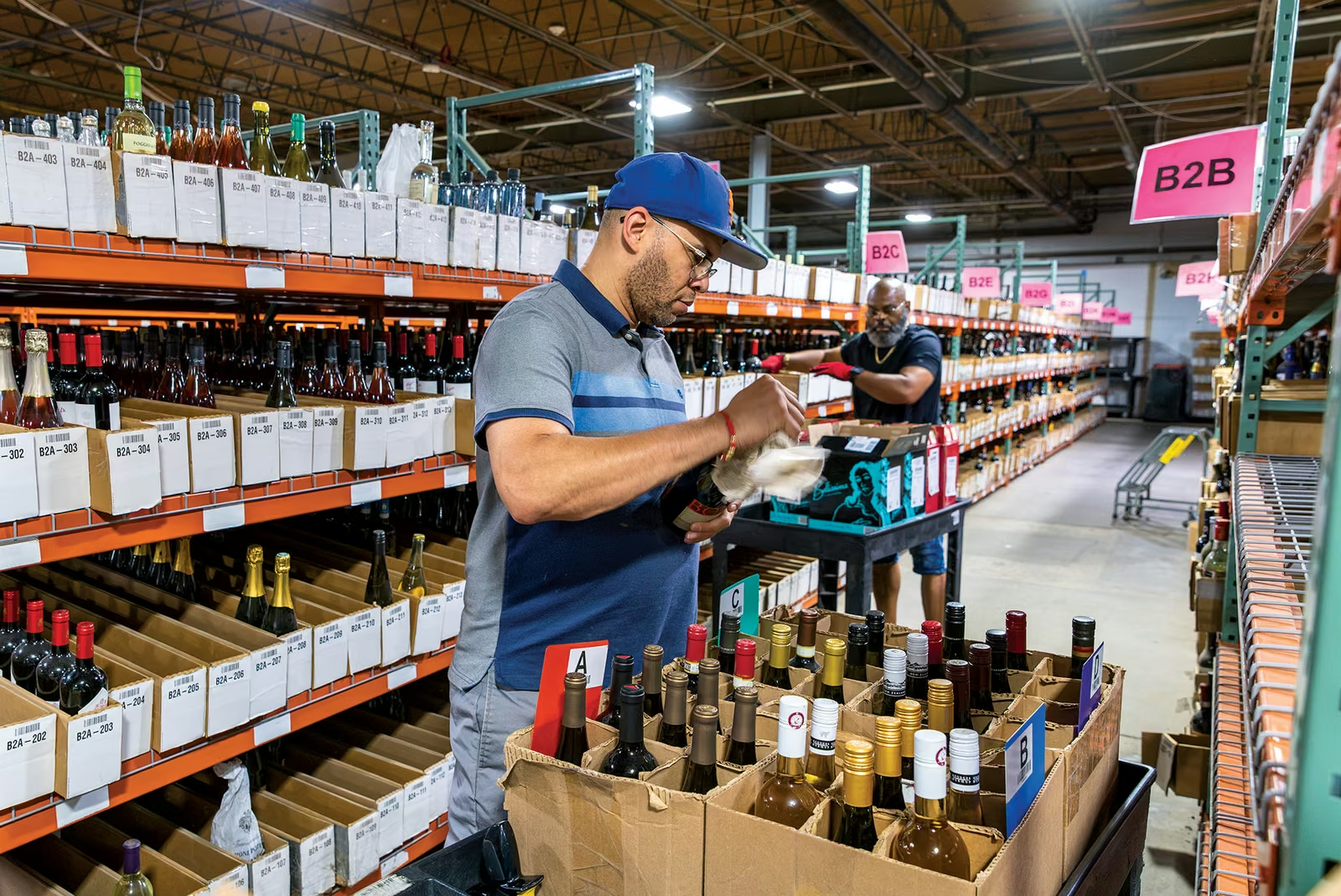
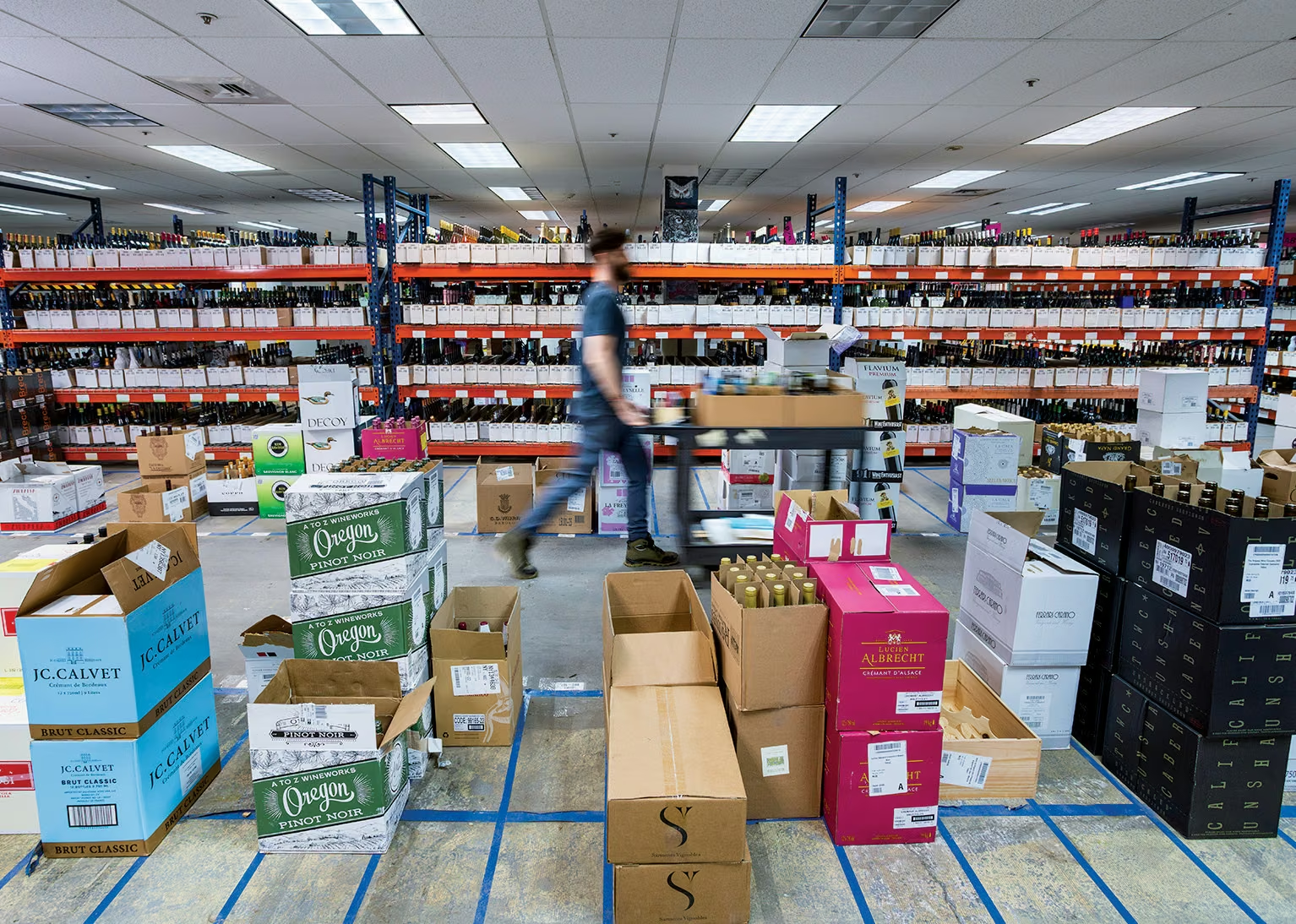
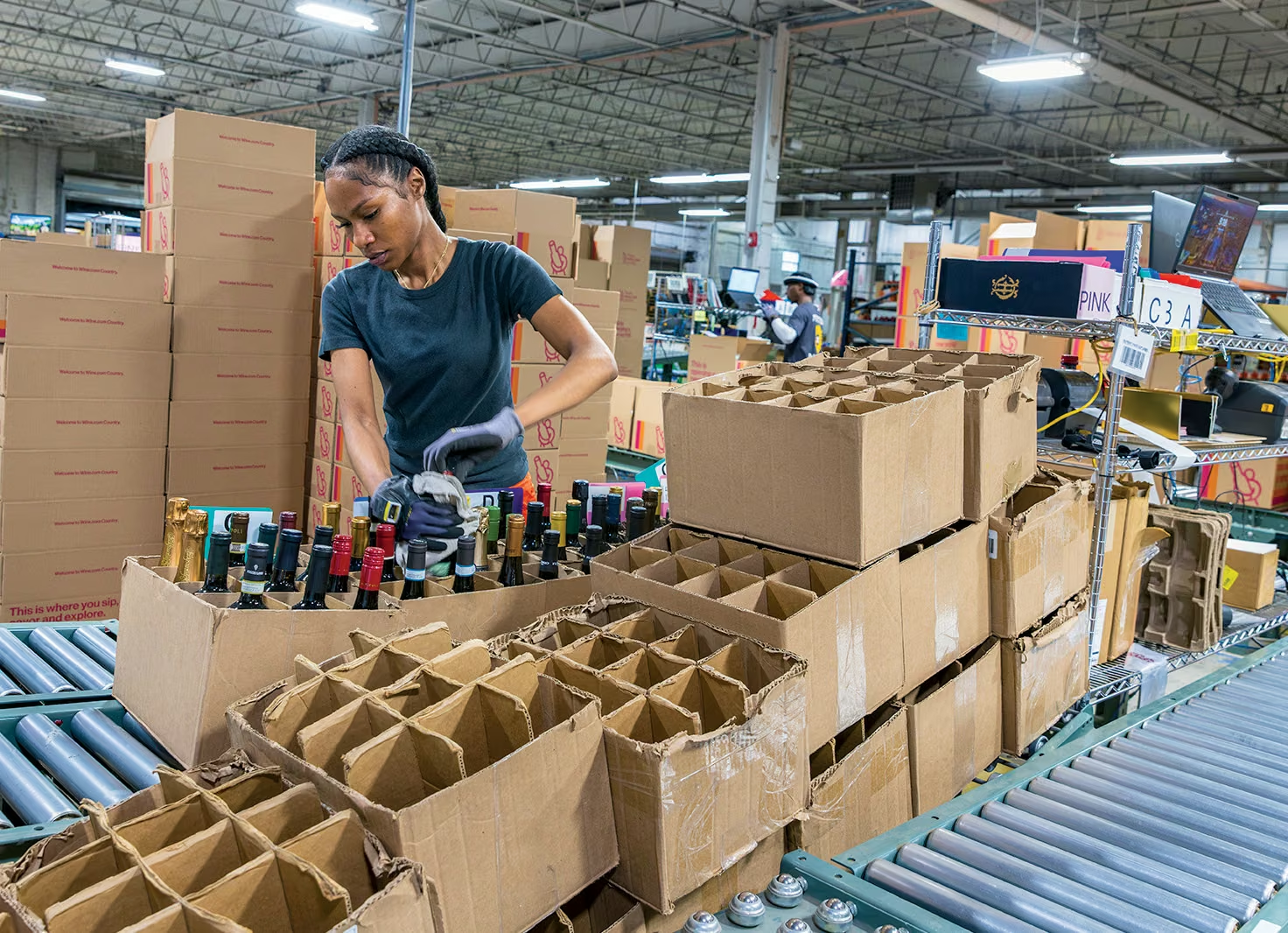
When Pinho took over as CEO, one strategy was to cull lower-priced wines from the portfolio, instead focusing on the super-premium and luxury tiers. Now, the online retailer carries around 20,000 wine SKUs, shipped to customers from six different facilities across the U.S.
Pinho says the strategy to largely eliminate lower-priced wines is still solid despite the current economic volatility that is curbing consumption across all categories. “Wines between $20 and $40 don’t seem to be pacing any differently than above $40 in terms of what we’re seeing demand wise,” he says. “Our high-end bottle sales doing great. Things that are over $100 receive plenty of bids as people continuing to try new things. The price sensitivity is where producers or suppliers have taken a lot of price [increase] over the last three or four years. They’re selling less, at least with us.” He adds that wines whose scores from wine-tasting experts don’t match their prices are also struggling. Producers are also learning higher-end pricing limits, he says. “Interestingly enough, Bordeaux is doing great for us, and that’s been going on for more than a year,” Pinho says. “The Bordelaise have adjusted some of their pricing and [made other changes], and that’s really provided some tailwinds.” Napa wine producers are now feeling some of the same backlash Bordeaux producers went through several years ago, with pricing not in sync with demand. Wine.com is also seeing increased demand for white wines as producers are shifting the spotlight to once-sidelined offerings. And wines from Spain and Portugal are resonating. “The combination of quality and pricing is terrific,” Pinho says. At the luxury end of the pricing spectrum, “Burgundy continues to run unabated in terms of demand for hard-to-find bottles,” although Loire Valley wines are stealing some share, he adds.
Beyond wine, Wine.com carries a small selection of spirits but due to shipping restrictions, spirits account for less than 5% of revenue. “What we’re trying to do now is curate the spirits business to be more focused on the higher-end consumer,” Pinho says, noting a focus on hard-to-find labels.
Looking Ahead
Wine.com is in the midst of its evolution under new leadership, but Pinho says the ultimate goal is to improve on all metrics. “For many years we’ve been successful without necessarily building all the things that customers need, and now as we’re slowly building toward what they’re asking for and what they need to grow with us, it’s turned into incremental growth for us,” he says. “That tells me folks are looking for these solutions. There aren’t many folks that are our size that can invest behind creating that customer experience, so if we can continue to be the leader, continue to evolve, continue to give folks an easy place to find what they’re looking for,” we’re going to be able to do better than the industry.
“People want access to information—they want the ability to figure things out quickly,” he continues. “What we’re trying to do is give them tools to make that shopping consideration much easier and faster. Are they learning about wine? Are they exploring? For young collectors, are they finding it easy to figure out which wines to invest in? These are all things that we’re building tools for. The game we’re playing is, can we be better tomorrow than we are today?”